There are places I can still walk through in my mind even though they haven’t looked the same in years.
My grandparents’ house outside Florence is one of them.
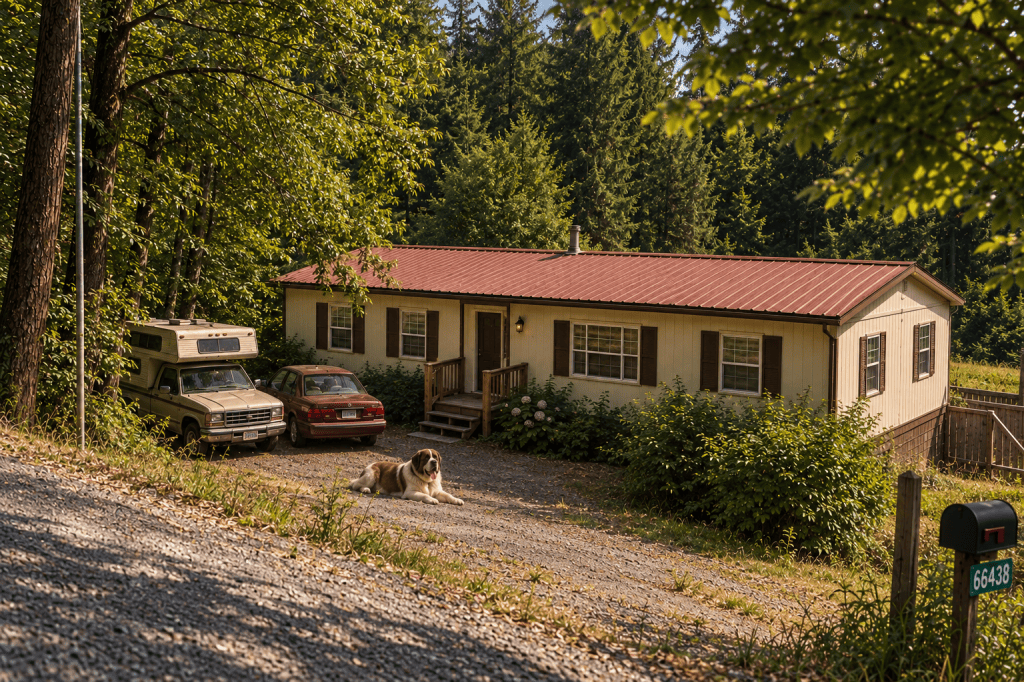
I remember the creamy off-white siding and chocolate-brown trim. I remember the little wooden porch my grandpa built himself, covered with those wavy clear fiberglass panels that let the light through. His old pickup with the camper over the cab would be parked beside the house, and Grandma’s maroon car wasn’t far away. She had Garfield stuffed animals suctioned to the window and lined up across the back.
And then there was Butch.
Butch had plenty of room to wander—and he did—but apparently the middle of the driveway was the best place on the entire property to lie down. He would stretch himself out across the gravel, tongue hanging out, completely unconcerned that anyone might actually need to drive there.
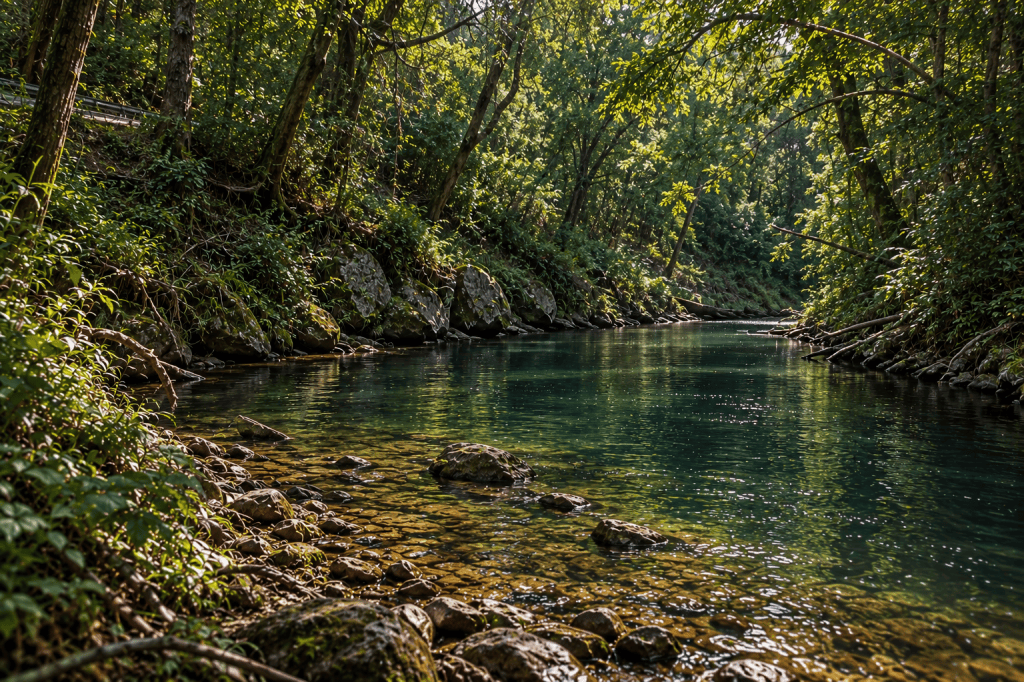
Behind the house was open grass surrounded by trees, with McLeod Creek winding through the property farther back.
When I found recent images of the house, I recognized it immediately.
But it wasn’t my grandparents’ house anymore.
The colors had changed. The porch wasn’t quite the way I remembered it. Grandpa’s truck wasn’t sitting outside. Grandma’s car was gone. Butch wasn’t blocking the driveway.
So I started putting those pieces back.
I used the images that still exist and my own memories to reconstruct the house as closely as I could to the way it looked when my grandparents were still alive.
And then suddenly, there it was.
The cream house.
The brown trim.
Grandpa’s porch.
His truck.
Grandma’s car.
Butch in the driveway.
For just a second, my first thought wasn’t about how accurate the image was.
It was simply:
Grandpa is home.
I think that’s one of the strangest things about writing The Girl Before the Tides. I’m not only remembering events. I’m rebuilding an entire world that doesn’t exist in quite the same way anymore.
The houses change. People leave. Trees grow. Cars disappear from driveways.
But somewhere inside us, certain places stay exactly where we left them.


Leave a Reply